authority enhancing profit maximizing Carbon brushes bundles?
Validating top operation in addition to longevity by a certain graphite brushes, some forward-looking plan exists as required. Constantly assess the brush components to recognize clues of wear, like splits either superfluous scuffing. Sustaining proper interface joining brushes and commutator is essential. Optimal results are gained through calibrating the brush holder screws to achieve a tight clamp without extra stress. What is more, upholding holders hygienic and free from waste encourages uninterrupted functioning. To obtain superior results, arrange brush carbon brush holders renewals routinely aligned with creator’s guidelines. Efficiently handled carbon brushes support trustworthy circuitry and extend appliance life.
Expert Advice on Carbon Brush Holder Selection
In reference to designing or opting for carbon brush holders within electric machinery, several elements demand thorough assessment. The arrangement of the holder substantially impacts brush working, service life, and overall output. For securing superior operation and durability, adopting a holder that complies with defined motor prerequisites is essential.
- Various issues affect perfect brush holder design, like motor category, voltage and amperage limits, working conditions, and targeted output.
- Determining materials is important for suitable holders Typical substances involve copper blends, polymers, and ceramic composites, all contributing distinct features for conduction, toughness, and heat endurance.
- Shape and configuration of brush segments also matter significantly Numbers, scales, and systems of brush sections necessitate careful planning to provide proper electric conduction and commutator engagement.
Furthermore, the holder's design should accommodate features that minimize brush wear, friction, and electrical arcing. Regularly involves deploying springs, holders, joint mechanisms ensuring consistent brush stress coupled with ventilation, refrigeration, thermal release units to stop overheating.
Slip Ring Construction and Materials for Enhanced Reliability
The lifespan of slip ring assemblies directly depends on the excellence of their parts. Manufacturing approaches significantly determine extended dependability. Ordinarily chosen components comprise copper, brass, bronze for contact surfaces, together with insulating materials like mica or epoxy facilitating electrical insulation. Latest slip ring schematics often entail parts like self-oiled, sealed off, contamination-proof bearings minimizing erosion and stress. Maximizing service life. Expertly crafted slip ring devices with right material selections play a key role in maintaining steady power flow and credible working efficacy in challenging environments.
Collector Ring Assembly
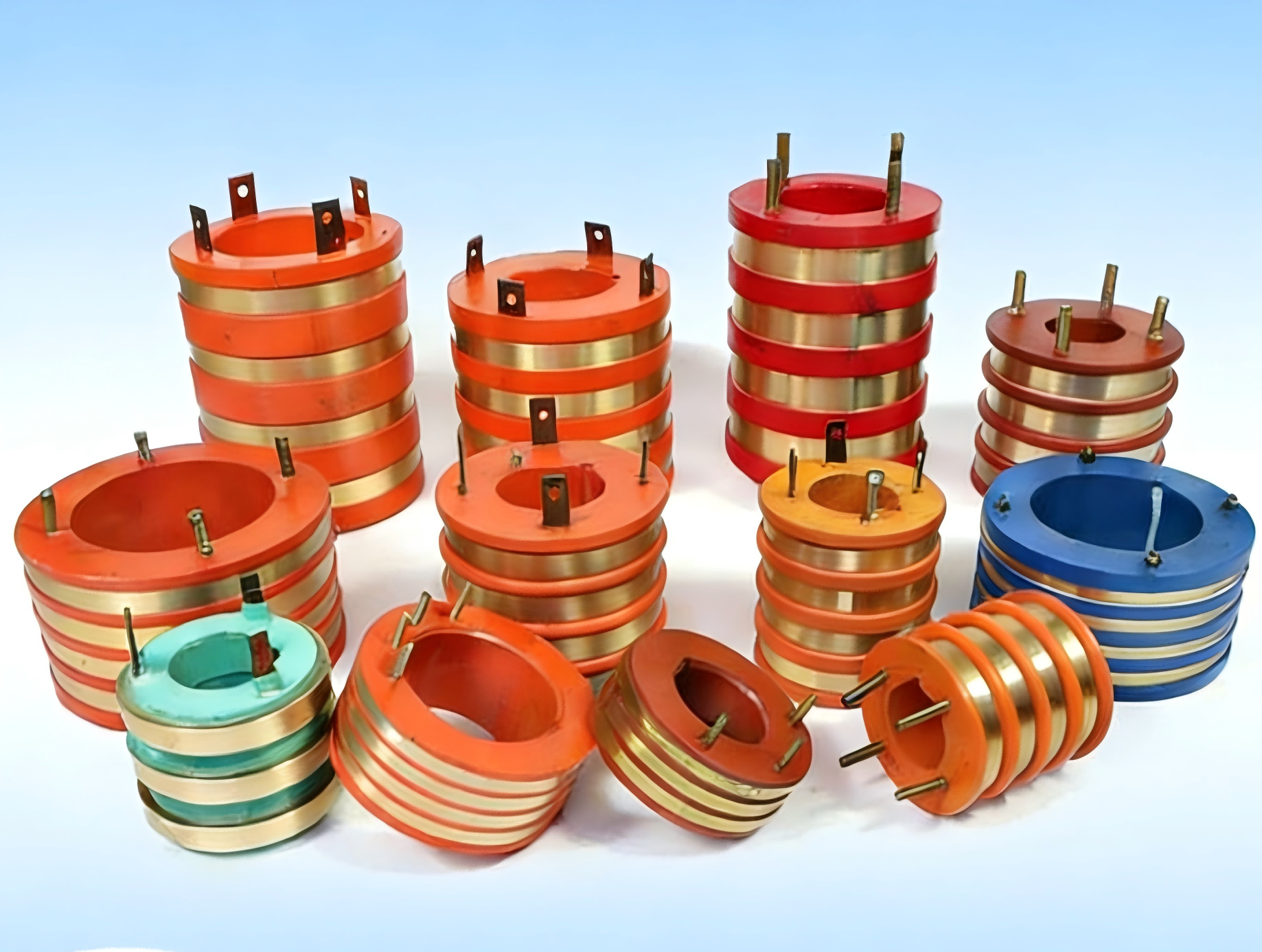
Collector rings bear significant functions in assorted electromechanical settings, focused on rapid revolving. Collector ring collections involve several conductive hoop elements facilitating power or communication transport across inert and turning sectors. Collector ring construction consists of necessary actions including material choice, fine machining of rings, and steadfast attachment to a rotating spindle. Correct assembly guarantees dependable electric links and reduces rubbing between rings and brushes.
- What is more, considering ring girth, segment division, and insulating materials is required for accurate compilation of collector rings. Individual assembly protocols alter in line with collector ring roles and manufacturer’s guidelines.
- Knowing nuances of collector ring fabrication remains vital for technical experts in developing, fabricating, or caring for rotating electric devices.
Suppressing Electrical Discharge in Rotational Machinery
Electric arcs occurring in rotary setups provoke a range of risky occurrences. This incident develops once powerful electric forces escape intended channels, largely owing to insulation wear or poor system alignment. Different safety protocols act to curtail this hazard. Primarily, guaranteeing insulation soundness is critical. Repeated reviews and updates to worn insulation assist in thwarting sparking. Later, proper oiling of rotary elements restrains slipping, easing wear on electric points. Moreover, employing reliable earthing installations effectively drains stray currents, lowering spark occurrence. Ultimately, refined adjustment of spin parts blocks surplus tension on electrical joints, further reducing arc events.
Decoding Carbon Brush Attrition Reasons
Carbon brush deterioration is a common challenge in electric motors and generators. Brush attrition results from a composite mix of processes dictating brush duration. Primary deterioration mode is grinding, stemming from persistent contact between brush and commutator. Such friction causes warming and persistently wears away the carbon block. Moreover, electrochemical corrosion adds to wear, as chemical interactions on brush and commutator surfaces cause progressive material loss. Extra contributors accelerating brush wear include electrical sparking causing specific surface degradation of brushes. Poor brush placement also boosts the speed of deterioration. Recognizing these attrition sources is key for boosting electric equipment output and lifespan through correct material usage and upkeep strategies.
Variables Impacting Carbon Brush Endurance
Brush longevity is conditioned by multiple factors. Friction wear resulting from commutator contact represents a leading reason often worsened by insufficient greasing. Carbon grade selection within brushes importantly affects durability, with tougher types resisting abrasion better. Thermal environment changes durability since abundant heat harms carbon composition. At last, erroneous installation of brushes provokes premature fault.
Troubleshooting Common Carbon Brush Issues
Carbon brushes function as significant parts in various machinery allowing smooth power conveyance between nonmoving and rotating elements. Yet brushes suffer erosion over time from contact, thermal influence, and debris aggregation. Recognizing common carbon brush issues early on is essential for preventing motor damage and downtime. Typical symptom involves a squealing sound emitted from the motor. This normally denotes brushes scuffed or missing full contact with the commutator. Checking brush condition can show wear evidence such as apparent notches, splits, or undue size. A further prevalent dilemma involves motor decline with reduced capacity or failed starting. This might demonstrate a drop in brush conduction efficiency. Further, witnessing arcing near brush areas evidently signals connection issues demanding rapid care. To treat such problems, fast replacement of impaired brushes is encouraged. Pick high-caliber replacement brushes tailored to your exact motor type. Check new brushes are properly placed and forming good interface with commutator. Preparing commutator surface ahead improves brush action. Through attentive brush maintenance, engine problems are avoidable and durability enhanced.
Choosing Suitable Slip Rings for Your Use Case
When selecting slip rings for your application, it's crucial to consider a number of factors. Basic requirement is specifying the signal nature sent through slip rings. Such signals can involve electrical transmissions, mechanical operations, or their blend. In addition, contemplating ambient factors engaging slip rings is necessary. Included conditions involve temperature gauges, dampness, and vibrations.
- Furthermore, you should pay attention to the size of the slip rings and their compatibility with your equipment.
- To finish, valuing respected suppliers with record of high-grade slip rings is crucial.
By detailed inspection of these parameters, suitable slip rings can be identified meeting exact prerequisites.
Decreasing Rolling Vibrations and Noise in Collector Rings
{Collector rings play a crucial role in rotary applications by facilitating the transfer of power and signals|Collector rings have key importance in rotational settings