cutting-edge prototyping services state-of-the-art drone machining?
Amidst the exacting domain of drone assembly where density and output reign, precision CNC machining has emerged as a crucial process. Programmed machinery attentively fabricates sophisticated sections using diverse substances such as alloyed metals, refractory alloys, and composite fibers. The fragments, extending from slim structures and rotors to elaborate electronic covers, need excellent exactitude and stability.
Merits of precise programmed milling appear extensively for aerial device assembly. It enables fabrication of low-mass pieces lowering entire vehicle heaviness, boosting flight effectiveness. In addition, exact dimension regulation guarantees flawless assembly of parts, resulting in enhanced flight dynamics and steadiness. Because of its skill in managing elaborate patterns and strict error margins, CNC supports innovators in enlarging drone design frontiers, promoting modern autonomous flying machine construction.
Quick Mockup Construction Utilizing CNC in Robotics
Within the evolving world of automated machines, where originality flourishes and accuracy dominates, fast mockup building is a vital resource. Digitally controlled manufacturing instruments, capable of assembling intricate components from heterogeneous supplies, support robotic designers in hastily embodying envisioned drafts into practical pieces. The core pliability of CNC empowers inventors to rapidly modify and enhance plans with pertinent data integrated during the construction sequence.
- Extending from minimal-mass aluminum for dexterous robots to resilient iron-based compounds for strenuous uses, CNC deals with multiple materials
- Leading-edge schematic software effectively merges with programmed machinery, allowing construction of highly refined representations
- That cyclic innovation formula meaningfully trims design spans and costs, empowering machine fabricators to commercialize fresh automated devices earlier
Precision Fabrication of Robot Elements via CNC
The production sector experiences a notable evolution fueled by implementation of innovative systems. Among the listed, computer-controlled numeric machining leads as a key player forming high-exactness device components with outstanding velocity and correctness. Computer-assisted machining apparatus employs design inputs to create detailed slicing outlines on varied elements, covering metals and polymers alike. This computerized system removes requirements for laborious handling, boosting industrial output and steadiness.
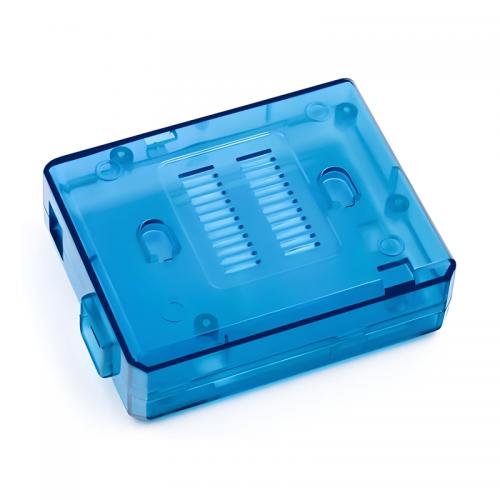
Using digital tooling, constructors manufacture elaborate mechanism portions including detailed outlines and narrow tolerances. The precision of CNC machines allows for the creation of components that meet the demanding requirements of modern robotics applications. The skill incorporates a significant range of automation parts, involving linkages, gauges, enclosures, and command units.
- Also, automated fabrication renders major advantages in budget-friendly approaches
- Employing computerized processes, creators curtail personnel fees, material discards, and production cycles
- The modifiability of digital fabrication instruments also encourages hasty draft creation and personalization, empowering manufacturers to keep pace with evolving demand
Streamlined Numeric Control Manufacturing for Robotics
Specialized crafting remains crucial throughout the industry of rapid drone assembly. Computer-aided cutting, given its extraordinary skill at shaping elaborate components from mixed materials, serves critically. Computerized proficiency enables producers to reliably create airframe parts satisfying rigorous specifications of contemporary aerial platforms. Spanning slim but resilient skeletons to detailed detector cases and powerful motor units, numeric control production aids UAV designers in advancing aeronautical innovation.
- Automated tooling’s malleability permits crafting assorted drone modules
- Adopting advanced cybernetic tooling technologies, constructors shape complex forms proficiently
- Numerical control processing provides outstanding consistency, delivering dependable aerial machine pieces
Tailorable Robotic Arm Modules: CNC Strategies
Algorithmic fabrication delivers adjustable means to assemble exact engineering arm elements. Exploiting computer-guided machines, engineers manufacture exclusive sections serving specific operational parameters. This level of customization enables the development of robotic arms with optimized performance, precision, and control. Furthermore, automated cutting guarantees premium, robust parts capable of enduring demanding working environments.The capacity of automated cutters to fashion detailed outlines and subtle motifs qualifies them well for fabricating mechanical appendage units like:
- Actuators
- Articulations
- Grippers
Numerical Control Machining : Meticulous Production for Flying Robots
{Unmanned Aerial Vehicles (UAVs), commonly known as drones, are increasingly utilized in a wide range of applications, from aerial photography to package delivery|Robotic aerial units, often referred to as drones, find expanding roles across diverse uses including sky imaging and parcel transportation|Autonomous flying machines, typically called UAVs, serve broad functions such as airborne filming and cargo conveyance|Self-directed aerial devices, also known as drones, see growing deployment in varied activities encompassing drone videography and shipment tasks|Remote-controlled flying vehicles, widely known as UAVs, participate in multifaceted purposes ranging from scenic capturing to load delivery|Pilotless air platforms, colloquially regarded as drones, apply to multiple fields from air recording to freight distribution|Unmanned flying platforms, frequently named UAVs, operate across numerous sectors involving aerial scanning and package logistics|Intelligent flight gadgets, commonly recognized as drones, fulfill expanding demands covering airborne cinematography and transport
The functionality of such unmanned platforms leans profoundly on meticulousness and correctness of their assemblies. Here, computerized milling assumes a crucial function. Cybernetic cutting furnishes outstanding leadership of substance removal, fostering production of intricate objects with narrow specifications. This accurate material proves vital for numerous aerial device elements, encompassing load-bearing structures, turning thrusters, and control enclosures
Values of programmed carving go beyond sheer accuracy. It provides great consistency, facilitating large-scale manufacture of uniform pieces with negligible deviation. This holds importance for robotic aircraft makers demanding elevated counts of portions to cope with booming buyer requests. Additionally, programmed milling handles a spectrum of elements like metals, synthetic compounds, and compounded composites, granting creators versatility in deciding best supplies for unique usages.
Because of steady improvements in aerial device science, cravings for high-tech and featherweight elements persist rising. Algorithm-driven cutting remains a crucial cornerstone backing fine fabrication in aerial robotic domains, spurring progress and extending flight technology thresholds
Moving Plans to Drafts: CNC Applications in Robotics
Throughout the adaptable realm of robotic devices, the passage to physical realizations from theoretical designs stands essential. Automated tooling stands as a necessary technique amid this evolution, backing creators in assembling elaborate robotic pieces with fine precision. Harnessing software-generated schematic plans for reference, numerical control tools sculpt sophisticated forms across mixed resources such as light alloys, steels and plastic composites. This adaptability renders CNC suitable to quickly produce various machine solutions, spanning factory robotics to portable units.
- The clarity and regularity of cybernetic shaping aid assembly of detailed mechanized components conforming to robust reliability demands
- Automated milling allows building diverse modules such as cogwheels, drive units, frames, and detectors
- Patterns developed using automated tooling yield significant data supporting trial and correction of automation strategies
Furthermore, the iterative nature of CNC machining facilitates rapid prototyping, enabling engineers to quickly iterate and refine designs based on feedback and testing results
Advancing Robotics with Advanced CNC Techniques
The fusion of robotic technologies with modern numerical control machining drives a paradigm shift in fabrication, automation, and development. Automated milling systems, famous for exact control, support assembling detailed automation units with outstanding correctness and consistency. This integration promotes advanced openings in cybernetic design, featuring work on nimble, robust devices coupled with assembly of complicated mechanisms for particular roles
- Further, state-of-the-art algorithmic carving enables mass output of unique cybernetic pieces, shrinking budgets and enhancing project timelines
- Accordingly, union of intelligent machines and algorithm-driven machining ushers novel robotic systems accomplishing sophisticated tasks with unparalleled exactness and performance
{Ultimately, the continued advancement in both robotics and CNC technology promises to transform numerous industries, drone parts machining enhancing productivity, safety, and innovation|In conclusion, ongoing progress within automation and program-controlled fabrication vows to revolutionize several sectors, boosting efficiency, protection, and creativity|Finally, persistent evolution in machine control and automated machining guarantees to reshape multiple fields, improving output, security, and inventiveness|